Retinol for Men: Everything You Need to Know Before Starting
Affiliate Disclosure: This article contains affiliate links. If you purchase through these links, we may earn a commission at no extra cost to you. As an Amazon Associate I earn from qualifying purchases. Full Disclosure
If there’s one ingredient that has more clinical evidence behind it than almost anything else in skincare, it’s retinol. More than 40 years of research confirm it works. It stimulates collagen production, accelerates cell turnover, reduces fine lines, clears acne, and evens skin tone. Dermatologists recommend it more consistently than any other topical treatment.
And yet, more men abandon retinol in the first month than stick with it — because nobody told them what to expect.
This guide fixes that. We’ll cover what retinol actually does, how to start correctly, what purging looks like (and why it means it’s working), and which products to use at each stage. By the end, you’ll have everything you need to start retinol successfully and actually see results.
What Retinol Actually Does to Your Skin
Retinol is a form of vitamin A — specifically, a retinoid. When applied to skin, it undergoes a two-step conversion: retinol becomes retinaldehyde, which then becomes retinoic acid (the active form that your skin actually uses). Retinoic acid binds to retinoid receptors in skin cells and triggers a cascade of cellular processes.
What happens at the cellular level:
Cell turnover acceleration: Retinoic acid signals skin cells to turn over faster — new cells from the deeper layers push older cells to the surface more rapidly. This clears dead cell buildup, reduces dullness, and helps unclog pores. It’s also why initial purging happens.
Collagen stimulation: Retinoids activate fibroblasts — the cells that produce collagen — and signal them to produce more. They also inhibit collagenase, the enzyme that breaks existing collagen down. The net effect is more collagen and slower degradation. Over months of use, this translates to visibly firmer, more resilient skin.
Reduction of fine lines and wrinkles: By both stimulating collagen and accelerating surface cell renewal, retinol reduces the appearance of fine lines. This effect is cumulative and builds over 3-6 months of consistent use.
Acne control: Faster cell turnover means pores stay clearer. Retinol also has anti-inflammatory properties that reduce the severity of existing breakouts. For men with adult acne, this dual action makes retinol one of the most effective long-term treatments available over-the-counter.
Evening of skin tone: Retinol reduces melanin production by inhibiting the enzyme tyrosinase. With regular use, dark spots, post-acne marks, and sun-damage hyperpigmentation gradually fade.
The Retinoid Spectrum: Understanding Your Options
Not all retinoids are equal. They exist on a spectrum of potency and irritation potential:
Retinyl esters (retinyl palmitate, retinyl acetate): The mildest form. Require multiple conversion steps to become active. Very gentle, but take longest to show results. Found in many anti-aging moisturizers. Good for extremely sensitive skin.
Retinol: The standard over-the-counter form. Requires two conversion steps. Effective with consistent use, though results take longer than prescription options. This is where most men should start.
Retinaldehyde (retinal): One step away from retinoic acid. More potent than retinol, less irritating than tretinoin. Found in mid-range to premium products. A good intermediate step.
Tretinoin (retinoic acid): Prescription-only in the US. The most potent and fastest-acting topical retinoid. Skips the conversion steps entirely — immediately active on contact. Delivers faster and more dramatic results but comes with more pronounced initial irritation. Available through dermatologists and, increasingly, telehealth platforms.
Adapalene (Differin): A synthetic retinoid available OTC that was prescription-only until recently. Formulated specifically for acne. Excellent tolerability profile — less irritating than tretinoin with strong clinical evidence for acne. Particularly relevant for men dealing with persistent breakouts.
Where to start: For most men, 0.25-0.5% retinol is the right entry point. Strong enough to work within a reasonable timeframe, gentle enough to build tolerance.
The Purging Problem — And Why It’s Actually a Good Sign
The most common reason men quit retinol is purging. They start using it, their skin breaks out more than usual for a few weeks, and they conclude the product is causing breakouts and stop.
This is the wrong call — and understanding why will save you from making it.
When retinol accelerates cell turnover, it also speeds up the timeline for existing congestion to reach the surface. Sebum that was slowly building toward a future breakout gets pushed to the surface weeks ahead of schedule. You get what looks like a wave of breakouts — but it’s actually old congestion clearing out faster than it otherwise would.
True purging characteristics:
- Occurs in areas where you typically break out
- Starts within 2-4 weeks of beginning retinol
- Consists mostly of whiteheads and small pimples, not cysts
- Resolves within 4-8 weeks without changing anything
Signs it’s not purging — it’s a reaction:
- Breakouts appear in areas where you never normally break out
- Skin is significantly red, burning, or peeling beyond mild sensitivity
- No improvement after 10-12 weeks
True purging requires patience, not stopping. It resolves on its own. The men who push through it are the ones who end up with clearer skin in month three.
The Right Way to Start Retinol
The most important thing you can have established before starting retinol: a functioning cleanser and moisturizer routine. Your skin barrier needs to be in reasonable health before you introduce a powerful active. If your skin is currently red, flaking, or significantly irritated from anything else, address that first.
The Start-Low-Go-Slow Protocol
Weeks 1-4: Apply retinol once per week, on a night when your skin isn’t freshly shaved. Use a pea-sized amount for your entire face. This gives your skin time to begin building tolerance without overwhelming it.
Weeks 5-8: Increase to twice per week if you’ve experienced minimal irritation. Still use a pea-sized amount. Assess for dryness, flaking, and sensitivity.
Weeks 9-12: Move to every other night if skin is tolerating well. By this point, most men have completed or nearly completed the purging phase.
Month 4+: Move to nightly use if skin is comfortable. Maintain at this frequency for consistent long-term results.
This gradual approach takes patience. The payoff is avoiding the cycle of heavy irritation, broken barrier, and quitting that ends most men’s retinol journeys prematurely.
The Sandwich Method
During the first 1-3 months, consider the sandwich technique for minimizing irritation:
- Cleanse and wait 10-15 minutes for skin to dry completely (wet skin increases retinol absorption and irritation)
- Apply a thin layer of plain moisturizer
- Apply retinol on top
- Apply another layer of moisturizer over the retinol
Buffering retinol between layers of moisturizer slows absorption and significantly reduces irritation without meaningfully reducing efficacy over time. As your skin builds tolerance, you can drop the sandwich approach and apply retinol directly.
Product Recommendations by Stage
Beginner (0.25-0.5% Retinol)
The Ordinary Retinol 0.5% in Squalane: Our top beginner recommendation. Simple formulation in a stable squalane base, at 0.5% — strong enough to work, approachable enough to build tolerance. Excellent value. Start here unless you have a specific reason not to.
RoC Retinol Correxion Line Smoothing Cream: A drugstore-available encapsulated retinol that releases slowly to reduce irritation. Slightly lower effective concentration but notably gentler for men with sensitive skin.
Paula’s Choice 1% Retinol Treatment: A step up in concentration with a thoughtfully formulated base that includes soothing peptides and antioxidants. A solid mid-range option when you’re ready to increase strength.
Intermediate (Retinaldehyde / 1% Retinol)
Naturium Retinal+ 0.05% Emulsion: Retinaldehyde (retinal) is more potent than retinol and one step closer to retinoic acid. This concentration is well-tolerated for men who’ve completed the retinol adjustment period.
Paula’s Choice Clinical 1% Retinol Treatment: At 1%, this is one of the strongest OTC retinol products available. Pair with a solid moisturizer and don’t use it more than 3-4 nights per week until fully adjusted.
Advanced (Adapalene / Tretinoin)
Differin Adapalene Gel 0.1%: Now available OTC. Developed for acne, but the cell turnover benefits apply broadly. Better tolerated than tretinoin. For men whose primary retinoid goal is acne control with anti-aging benefits, this is an excellent choice.
Tretinoin (prescription): If you’re ready for the most effective retinoid available, talk to a dermatologist or telehealth provider. Starting concentrations are typically 0.025% or 0.05%. The adjustment period can be more intense, but results are faster and more pronounced.
What to Avoid When Using Retinol
UV exposure without SPF: Retinol increases photosensitivity. This is non-negotiable — you must use a broad-spectrum SPF 30+ every morning when you’re using retinol at night. Skipping SPF while using retinol will cause your skin to be more vulnerable to UV damage, which defeats the purpose entirely.
AHAs and BHAs on the same night: Glycolic acid, lactic acid, and salicylic acid are all effective exfoliants, but combining them with retinol on the same night stacks irritation potential dramatically. Use them on alternating nights instead.
Harsh bar soap on your face: Alkaline soaps damage the acid mantle, and with a disrupted barrier, retinol irritation becomes much more intense. Use a pH-balanced facial cleanser.
Waxing treated areas: Retinol makes skin more vulnerable to tearing during waxing. Pause retinol in any area you plan to wax 5-7 days before.
Starting retinol before a major event: The first 6-8 weeks of retinol can involve visible purging and mild flaking. If you have an important event, start retinol at least 3 months ahead — or wait until after.
Managing Retinol Side Effects
Dryness and flaking: Normal during adjustment. Address with a richer moisturizer — CeraVe Moisturizing Cream applied after retinol is the classic pairing. If significant, use the sandwich method described above.
Redness: Mild redness is common. Severe redness or burning suggests you’re moving too fast — drop back to once a week and rebuild gradually. Adding niacinamide serum to your routine helps reduce retinol-associated redness.
Increased sensitivity: Your skin is temporarily more reactive during retinol adjustment. Simplify the rest of your routine — avoid introducing new products at the same time. This isn’t the moment to start an acid exfoliant.
Peeling: Mild peeling is acceleration of cell turnover in action. Don’t physically exfoliate it away — this disrupts the barrier. Let it shed naturally and keep skin moisturized.
Retinol and the Shaving Consideration
Men face a complication women don’t: shaving. Freshly shaved skin has a temporarily compromised barrier, making it significantly more sensitive to retinol.
Practical approach: On nights you shave, skip retinol and use your regular moisturizer only. Apply retinol on non-shaving nights. As your skin builds tolerance over 3-4 months, you can experiment with applying retinol after shaving — but keep the sandwich method in place on those nights.
If you shave daily, consider rotating retinol to nights following days when you shaved in the morning and your skin has had all day to recover.
The Timeline: What to Expect and When
Weeks 1-4: Building tolerance. Possible purging begins. Minimal visible results yet — the work is happening below the surface.
Weeks 5-8: Purging, if it occurred, begins to resolve. Skin texture may begin to feel smoother. Oily skin may start to notice improved pore clarity.
Months 3-4: Meaningful visible results for most men. Smoother texture, more even tone, some reduction in fine lines. This is where the investment pays off.
Months 6-12: The most dramatic improvements. Collagen synthesis improvements become visible as firmness increases. Hyperpigmentation continues to fade.
Long-term: Retinol works best as a permanent addition to your routine, not a temporary treatment. The results accumulate with years of use. Men who start in their late 20s and maintain consistent use through their 40s and 50s show dramatically better skin aging patterns than those who don’t.
Fitting Retinol Into Your Full Routine
Retinol is an addition to a complete routine, not a replacement for one. Your foundation — cleanser, moisturizer, SPF — needs to be established and working before you add retinol. Our complete men’s skincare routine guide builds that foundation step by step.
Once retinol is established, you can consider pairing it with vitamin C in your morning routine (antioxidant protection by day, cell renewal by night is a proven combination) and niacinamide as a buffer for any retinol-related redness. For product recommendations across every category, our CeraVe vs Kiehl’s vs Clinique comparison and La Roche-Posay vs CeraVe guide cover the moisturizer question in depth.
The Bottom Line
Retinol works. The clinical evidence is extensive and decades long. Men who use it consistently and correctly see real, visible improvements in skin texture, tone, fine lines, and acne — results that no other OTC skincare ingredient matches.
The key is starting correctly: low concentration, infrequent application, building gradually, and not quitting when purging happens. The men who do this see results. The men who use full-strength retinol every night in week one and quit at week three due to irritation do not.
Start with 0.5% retinol once a week. Apply SPF every morning without exception. Give it four months before evaluating. That’s the whole strategy.
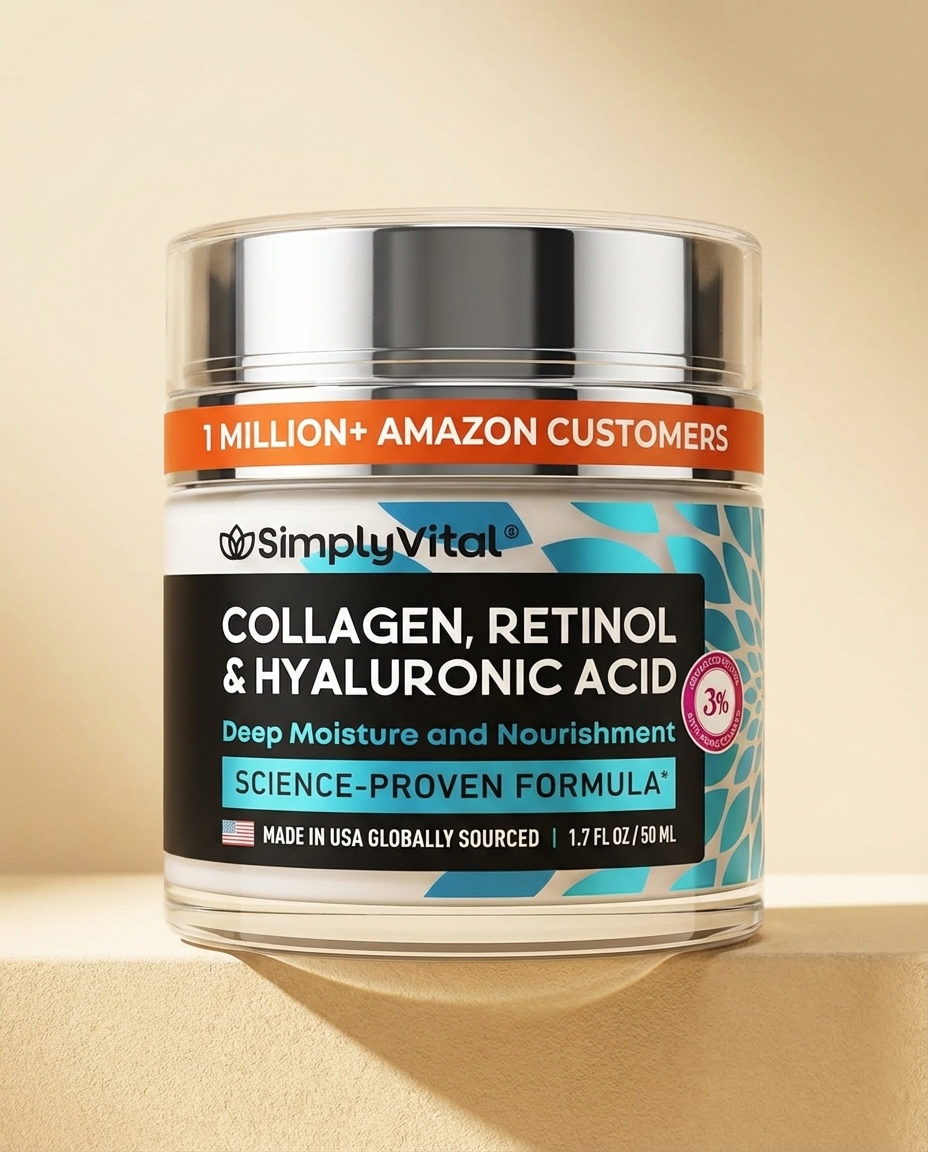
Recommended Products
Anti-Aging Face Moisturizer with Retinol
by Anti-Aging
What We Like
- Top-rated in its category
- Well-reviewed by skincare enthusiasts
Could Be Better
- Check Amazon for current availability
Frequently Asked Questions
When should men start using retinol?
Most dermatologists suggest starting retinol in your late 20s to early 30s as a preventive measure. However, men with acne can benefit from retinol at any age, and men over 40 starting for the first time will still see meaningful results. It's never too late.
What is retinol purging and how long does it last?
Purging is a temporary increase in breakouts that occurs in the first 4-8 weeks of retinol use. It happens because retinol accelerates cell turnover, pushing congestion to the surface faster than usual. It's not an allergic reaction — it means the product is working. Purging resolves on its own within 6-8 weeks.
Can men use retinol every night?
Eventually, yes — but not when starting. Begin with one or two nights per week for four weeks, then gradually increase. Your skin needs time to build tolerance to retinol. Jumping straight to nightly use typically causes significant irritation, dryness, and peeling.
What's the difference between retinol and tretinoin?
Tretinoin (retinoic acid) is prescription-strength and works 20 times more powerfully than over-the-counter retinol. Retinol must be converted by your skin into retinoic acid before it acts — tretinoin skips that step. Tretinoin delivers faster results but also more pronounced initial irritation. Both are effective; tretinoin is simply more powerful.
Should men use retinol in the morning or at night?
Night only. Retinol degrades in UV light and can increase photosensitivity. Always apply retinol as part of your evening routine and ensure you're using SPF every morning without exception. This is non-negotiable when using retinol.
Can retinol be used with niacinamide?
Yes — contrary to older skincare lore, niacinamide and retinol work well together. Niacinamide actually helps reduce the redness and irritation that retinol can cause, making it a valuable pairing especially during the adjustment period.
What ingredients should not be used with retinol?
Avoid using retinol on the same night as AHAs (glycolic, lactic acid) or BHAs (salicylic acid). The combination dramatically increases the risk of irritation and barrier disruption. If you use exfoliating acids, do them on alternating nights. Vitamin C is best used in the morning when retinol is used at night.